
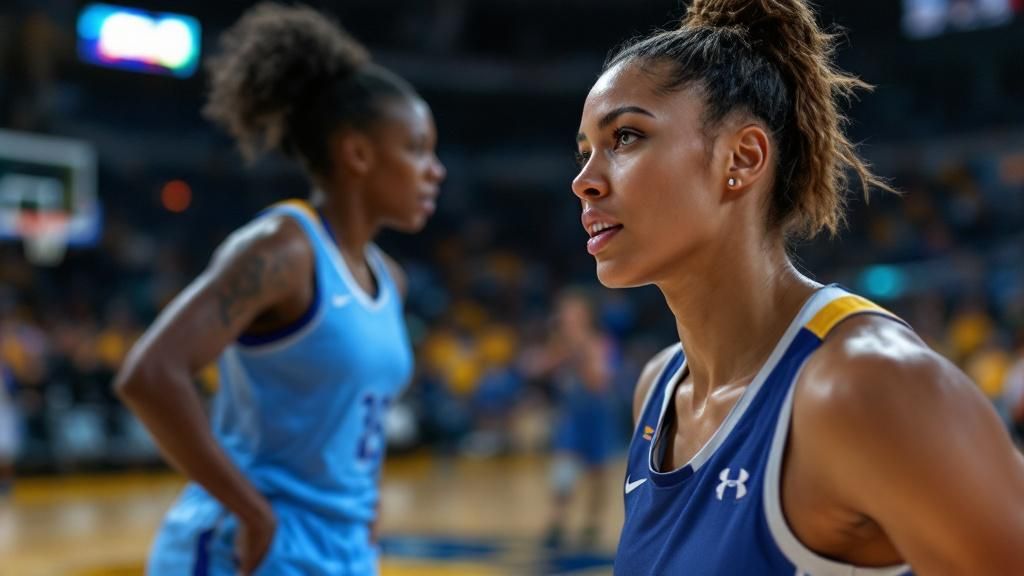
Women’s basketball players around the world are growing more outspoken in their calls for equal pay and substantial investment in their sport. Despite decades of athletic excellence and expanding audience interest, female athletes still earn significantly below the earnings of their male counterparts, whilst getting little media coverage and sponsorship opportunities. This article examines the ongoing campaign for gender equity in professional basketball, analysing the systemic barriers players face, the financial case supporting their demands, and the significant shifts needed to secure women’s sport receives the acknowledgement and funding it rightfully deserves.
The Wage Gap Crisis in Women’s Basketball
The financial gap between male and female elite basketball athletes represents one of the most egregious imbalances. Women competing in top-tier leagues earn considerably below their male counterparts’ salaries, with some players receiving yearly earnings substantially below the poverty line. This disparity extends beyond base salaries to include sponsorship deals, endorsement opportunities, and broadcasting rights, producing a multiplying setback that damages career sustainability and career advancement for female athletes.
Investment inequalities worsen the pay gap, with women’s leagues receiving minimal funding for infrastructure, marketing, and player development programmes. Whilst men’s basketball organisations receive major broadcast deals and business partnerships, women’s teams contend with restricted funding that constrain player numbers, standard of coaching, and facility standards. These institutional disparities perpetuate a cycle where underfunding creates lower public profile, which in turn justifies lower investment, ultimately disadvantaging players who deserve fair pay for their ability, effort, and capacity to engage audiences.
Capital Gaps and Media Coverage
The economic disparity between men’s and women’s elite basketball remains striking, with investment in women’s leagues falling well short of their male counterparts. News outlets allocate substantially fewer broadcasting hours to women’s matches, resulting in diminished exposure and sponsorship revenue. This disparity extends to infrastructure, training facilities, and marketing budgets, establishing a vicious circle where reduced funding results in limited visibility, which subsequently warrants additional financial reductions. The consequence is a performance gap that damages the quality and growth potential of women’s basketball globally.
Media reporting plays a key role in establishing the commercial sustainability of any sport, yet women’s basketball receives a small portion of the airtime dedicated to men’s competitions. Major broadcasting networks often schedule women’s matches at unsuitable times or relegate them to subsidiary networks, restricting audience reach and engagement. This disparity in airtime directly affects sponsorship opportunities and merchandise sales, leaving female athletes with fewer financial benefits. Tackling these inequalities requires deliberate investment from broadcasters, broadcasters, and corporate sponsors who recognise the untapped potential and expanding fanbase within women’s professional basketball.
Player-Led Movements and What Lies Ahead
Women’s basketball players have established themselves as powerful advocates for institutional reform, leveraging their platforms to challenge entrenched inequalities and catalyse coordinated efforts. Players such as Sue Bird and Diana Taurasi have established themselves as prominent voices for equal investment, leveraging their prominence to illuminate the disparity between men’s and women’s professional leagues. Their activism has generated substantive dialogue amongst regulatory authorities, sponsors, and news organisations, demonstrating that player solidarity can produce measurable advancement. Through structured advocacy efforts and visible activism, these athletes persistently intensify calls for comprehensive reform across financial remuneration, infrastructure, and media coverage.
The path ahead of women’s basketball requires continuous commitment from multiple stakeholders committed to real transformation. Modern policies introduced by leagues such as the WNBA—including increased wage structures and strengthened visibility campaigns—offer strong models for worldwide federations. However, substantial obstacles remain, requiring persistent pressure from players, backing bodies, and active advocates. The path of women’s professional basketball will ultimately demonstrate public readiness to properly fund female athletes, recognising both their remarkable skill and their invaluable contributions to sport’s place in society.
Moving ahead, the intersection of player activism and organisational reform presents unprecedented opportunities for reshaping professional basketball’s future. By maintaining momentum and requiring transparency, women athletes keep forging routes towards genuine equality, inspiring younger generations whilst substantially shifting perceptions of women’s sport globally.
